
Team
Client: Malta Tourism Authority and Fondazzjoni Wirt Artna
Lead Perit/i: KED
Architecture Design Perit/i: KED
Conservation Perit/i: KED
Planning Consultant Perit/I: KED
Project Manager: Malta Tourism Authority
KED TEAM : Perit Kleaven Maniscalco
KED TEAM: KED , KED
MTA TEAM : Malta Tourism Authority
FWA Team: Fondazzjoni Wirt Artna , Fondazzjoni Wirt Artna
Photography : Malta Tourism Authority
The €3.4 million restoration and adaptive reuse of St Thomas Tower in Marsascala marks a new milestone in Malta’s heritage conservation and cultural tourism strategy. Co-financed by the European Regional Development Fund (2014–2020) and the Malta Tourism Authority (MTA), and undertaken in partnership with Fondazzjoni Wirt Artna, the project has successfully transformed this 17th-century fortress into the Pirates and Corsairs Museum—the first institution in Malta exclusively dedicated to piracy and corsairing in the Mediterranean.
Constructed in 1614 under Grand Master Alof de Wignacourt, St Thomas Tower is the largest of the island’s coastal towers. Originally designed to defend Marsascala Creek and St Thomas Bay, it stood as a bulwark against Ottoman and corsair incursions. However, centuries of exposure, neglect, and unsympathetic adaptations left the structure in urgent need of rescue. The recent project not only stabilized and preserved its historic fabric but also repurposed it into a dynamic cultural space with long-term sustainability at its core.
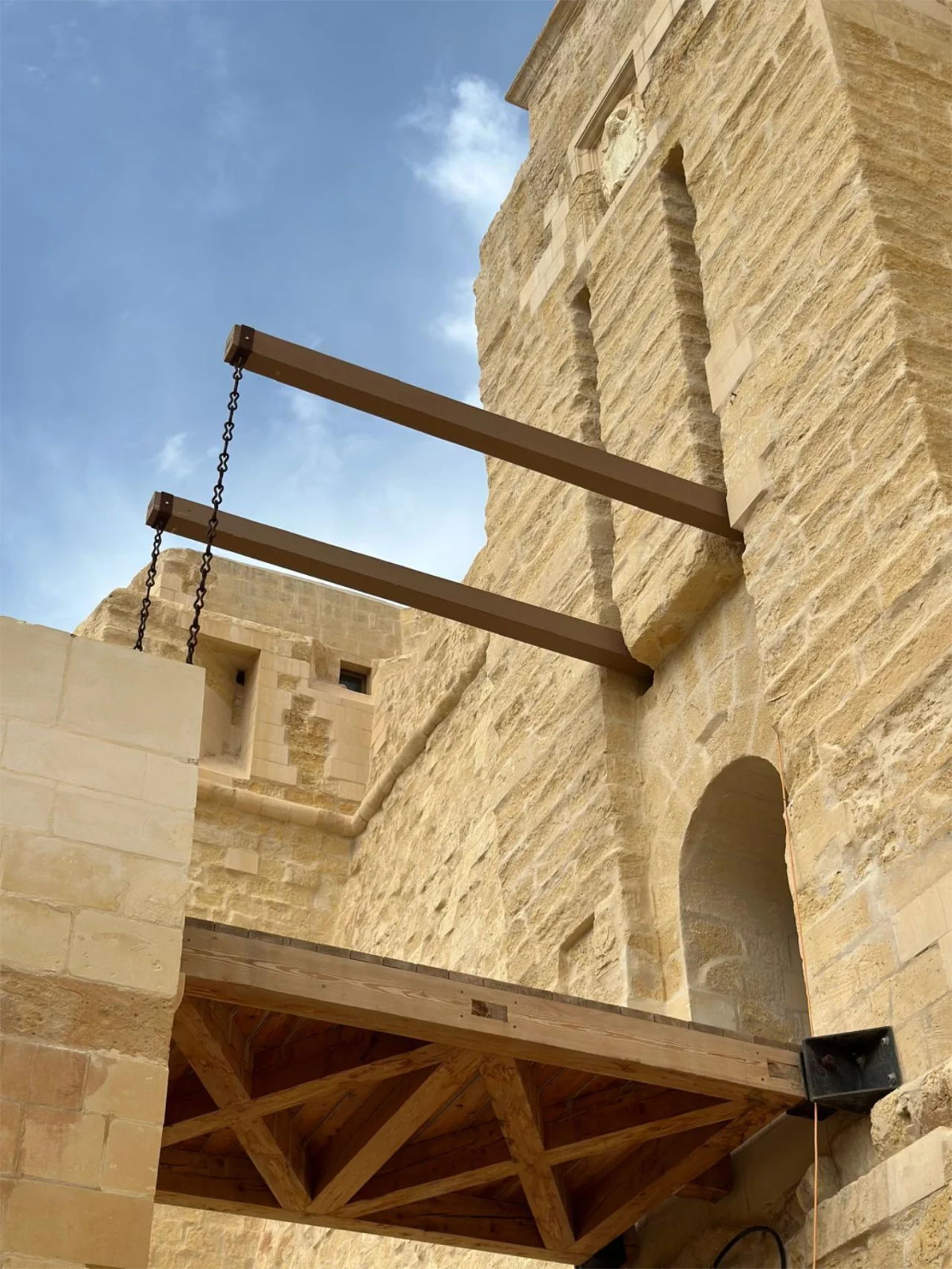
Restoration works were comprehensive. Structural consolidation safeguarded the tower’s stability, while masonry was meticulously cleaned and repaired. Several original features, including the drawbridge, palisade, chapel, and musketry loopholes, were reinstated. Archival research guided the faithful reconstruction of the semi-circular battery, ditch, and turrets, while intrusive modern additions were carefully removed. To reconcile preservation with accessibility, discreet upgrades were added: climate control, LED lighting, Wi-Fi, security systems, and a lift providing universal access to all levels, including the rooftop with its sweeping coastal views.
Sustainability was a guiding principle. Two reservoirs were rehabilitated for rainwater harvesting, providing irrigation and sanitary supply. Energy efficiency was ensured through sensor-controlled lighting and intelligent climate management systems. All interventions followed the principles of minimal intervention and reversibility, safeguarding the site’s authenticity while preparing it for continued use.
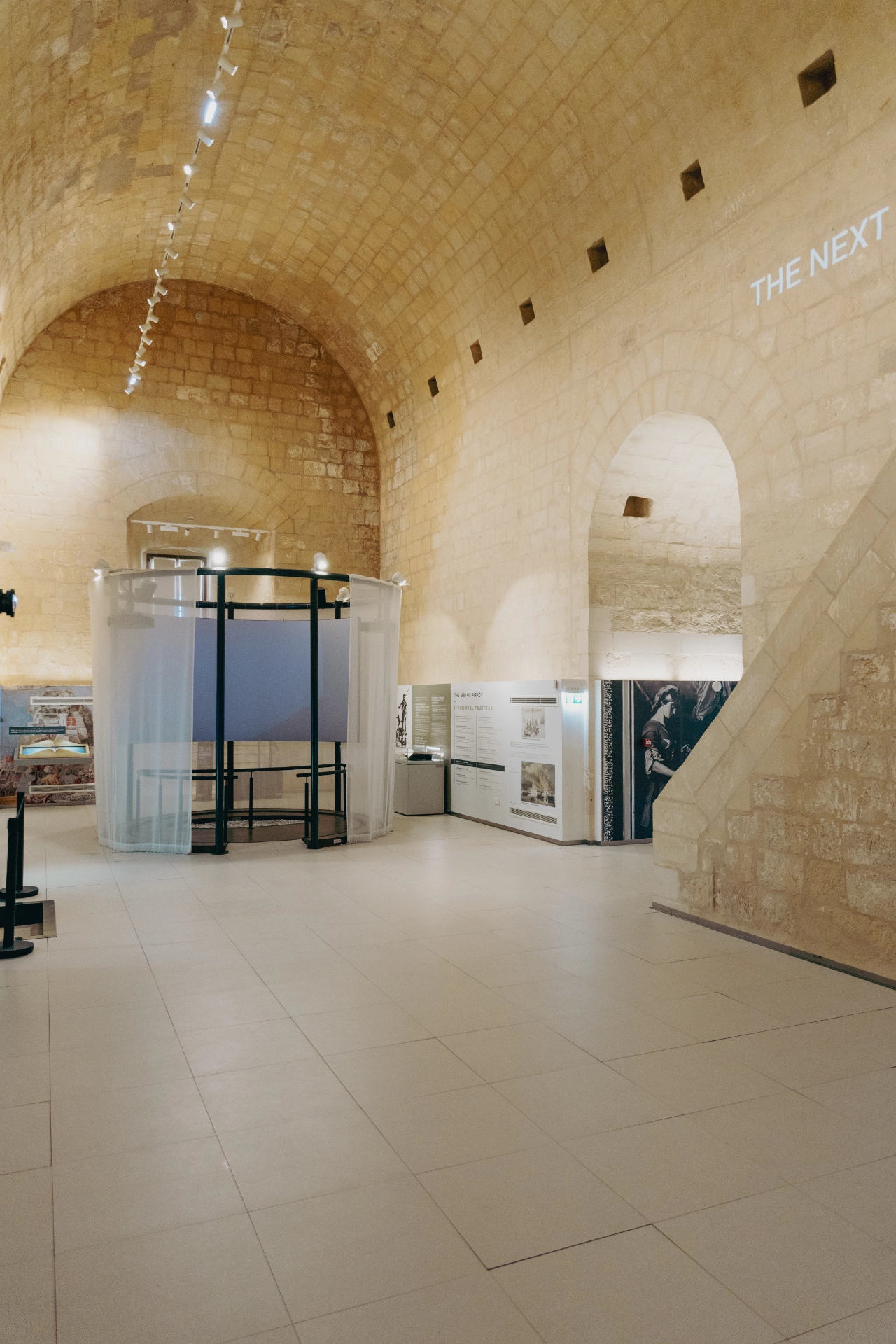
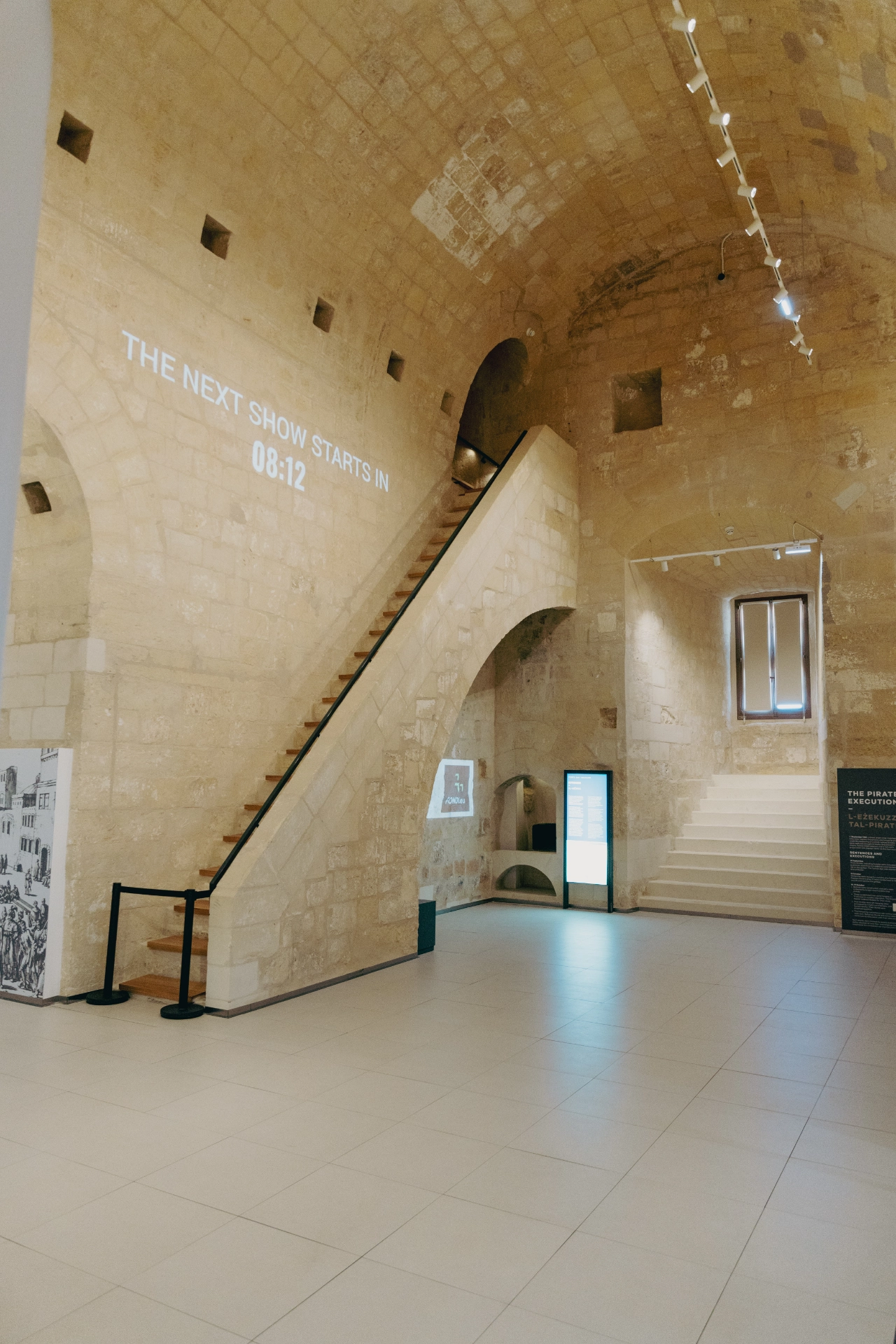
The Pirates and Corsairs Museum invites visitors into a vivid and multi-sensory journey through Malta’s maritime past. Through immersive audiovisuals, projection mapping, interactive displays, models, and hands-on installations, guests encounter the world of Mediterranean corsairs and pirates. The museum explores their vessels, weapons, and tactics, while also revealing the social, architectural, and cultural impact of their raids on Maltese life. Highlights include period arms and armour, finely crafted ship models, interactive cannon-firing games, folklore exhibits such as Għar Ħasan and l-Għarusa tal-Mosta, and a large-scale projection narrating the 1798 recapture of the tower by Maltese militia. The narrative concludes by linking history to the present, with features on modern piracy and Malta’s contribution to international anti-piracy operations.
Beyond its historical and educational role, the project enriches Malta’s tourism offer, expanding attractions beyond traditional hubs and strengthening Marsascala as a cultural destination. The museum provides year-round access, guided tours, family-oriented activities, and educational programmes, ensuring broad community and economic benefit.
Through this ambitious initiative, St Thomas Tower regains its status as a national landmark – a fortress of defence reimagined as a museum of maritime adventure, and a living testament to Malta’s enduring resilience.
